Inserts, Bushes & Spacers: Critical Components for Precision Assembly and Load Management
04
Jan
In modern engineering and manufacturing, precision is not achieved by major components alone. Small yet critical parts such as inserts, bushes, and spacers play a decisive role in ensuring structural integrity, smooth operation, accurate alignment, and long-term reliability of assemblies. These components are extensively used across electrical, automotive, industrial machinery, plumbing, and engineering applications where performance, durability, and dimensional accuracy are non-negotiable.
This blog explores the importance of inserts, bushes, and spacers, their manufacturing process, material advantages, applications, and why precision machining is essential for their performance.
Understanding Inserts, Bushes & Spacers
Although often grouped together, inserts, bushes, and spacers serve distinct but complementary functions in mechanical and electrical assemblies.
Inserts
Inserts are internally or externally threaded components used to create strong, wear-resistant threads in softer materials such as plastic, aluminum, or wood. They improve thread life, load-bearing capacity, and assembly reliability.
Bushes
Bushes (also known as bushings) are cylindrical components designed to reduce friction, support rotational or sliding movement, and absorb wear between moving parts. They act as a protective interface between shafts and housings.
Spacers
Spacers are used to maintain precise gaps, alignment, and positioning between components in an assembly. They help distribute load evenly and prevent deformation or misalignment.
Together, these components ensure precision assembly, reduced wear, and smooth system operation.
Importance of Precision in Inserts, Bushes & Spacers
Due to their functional role, even minor dimensional deviations in these components can lead to:
-
Improper alignment
-
Excessive wear
-
Vibration and noise
-
Premature component failure
Precision machining ensures tight tolerances, accurate dimensions, and consistent performance, especially in high-load or high-cycle applications.
Materials Used for Inserts, Bushes & Spacers
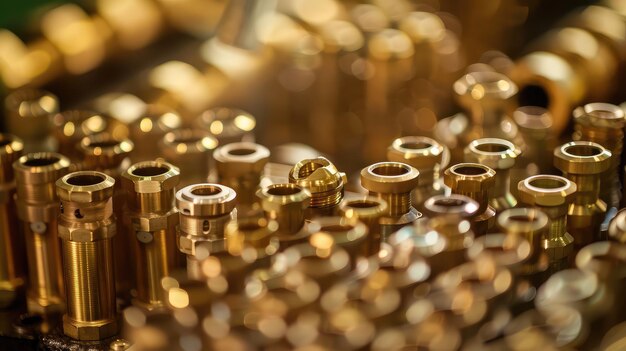
Brass – The Preferred Choice
Brass is widely used for inserts, bushes, and spacers due to its excellent machinability and balanced mechanical properties.
Key advantages of brass:
-
High corrosion resistance
-
Excellent machinability
-
Low friction and wear resistance
-
Good load-bearing capability
-
Electrical conductivity for electrical applications
Other Non-Ferrous Metals
Depending on the application, components may also be manufactured from copper, bronze, aluminum, or specialized non-ferrous alloys to meet specific strength, conductivity, or environmental requirements.
Manufacturing Process of Inserts, Bushes & Spacers
Precision manufacturing involves a series of controlled steps to ensure consistency, strength, and accuracy.
1. Raw Material Selection
High-quality brass rods or bars are selected based on required alloy composition and mechanical properties. Incoming material inspection ensures compliance with technical standards.
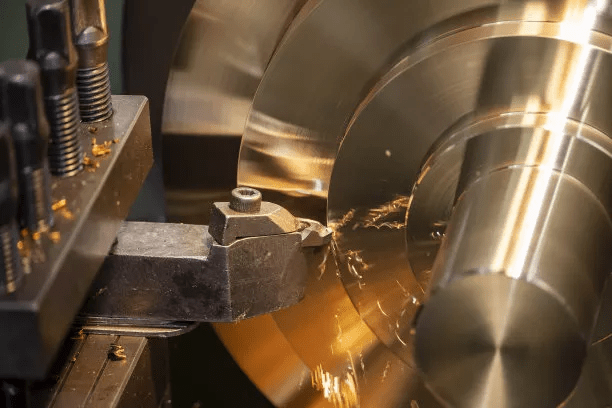
2. CNC Turning & Machining
Advanced CNC turning machines are used to perform:
-
External and internal turning
-
Threading
-
Drilling and boring
-
Knurling and grooving
CNC machining ensures repeatability, tight tolerances, and uniform quality across batches.
3. Secondary Operations
Depending on application requirements, components may undergo:
-
Deburring
-
Polishing
-
Surface finishing
-
Special threading or coating
These processes improve surface finish, corrosion resistance, and functional performance.
4. Quality Inspection
Each component is inspected using precision gauges and measuring instruments to verify:
-
Dimensions and tolerances
-
Thread accuracy
-
Surface finish
This ensures components meet customer specifications and international quality standards.
Functional Advantages of Inserts
-
Enhance thread strength in soft materials
-
Improve load distribution
-
Reduce thread wear and stripping
-
Enable repeated assembly and disassembly
Brass inserts are commonly used in electrical enclosures, plastic housings, control panels, and automotive parts.
Functional Advantages of Bushes
-
Reduce friction between moving parts
-
Absorb wear and vibration
-
Improve equipment lifespan
-
Support smooth rotational or sliding motion
Bushes are essential in automotive assemblies, industrial machinery, pumps, motors, and mechanical systems.
Functional Advantages of Spacers
-
Maintain precise alignment and spacing
-
Prevent deformation during tightening
-
Distribute loads evenly
-
Improve assembly accuracy
Spacers are widely used in electrical panels, machinery assemblies, structural frameworks, and equipment housings.
Applications of Inserts, Bushes & Spacers
Electrical & Electronics Industry
Used in control panels, switchgear assemblies, enclosures, and terminals where precision and electrical compatibility are required.
Automotive Industry
Applied in engines, braking systems, suspension components, sensors, and assemblies exposed to vibration and load.
Industrial Machinery
Used in shafts, couplings, gears, pumps, compressors, and rotating equipment requiring wear resistance and alignment accuracy.
Plumbing & HVAC Systems
Bushes and spacers are used in fittings, valves, and assemblies where corrosion resistance and dimensional stability are essential.
General Engineering & Fabrication
Used across a wide range of mechanical assemblies, tools, and equipment.
Custom Inserts, Bushes & Spacers
Standard components may not always meet specific application requirements. Precision machining enables custom manufacturing based on:
-
Customer drawings or samples
-
Special dimensions and tolerances
-
Custom threading or knurling
-
Specific surface finish or coating
Custom components ensure optimal fit, improved performance, and reduced assembly issues.
Quality & Consistency in Manufacturing
Reliable performance depends on consistent quality. Professional manufacturers follow strict quality control systems that include:
-
Incoming material inspection
-
In-process dimensional checks
-
Final inspection and verification
This ensures uniformity across production batches and dependable performance in critical applications.
Role in Long-Term Equipment Reliability
Although small in size, inserts, bushes, and spacers have a significant impact on:
-
Equipment efficiency
-
Maintenance frequency
-
Operational safety
-
Product lifespan
Using high-quality precision-machined components reduces downtime, minimizes wear-related failures, and improves overall system reliability.
Recent Post