Brass, Copper & Non-Ferrous Metal Components: Why Non-Ferrous Metals Dominate Modern Engineering
04
Jan
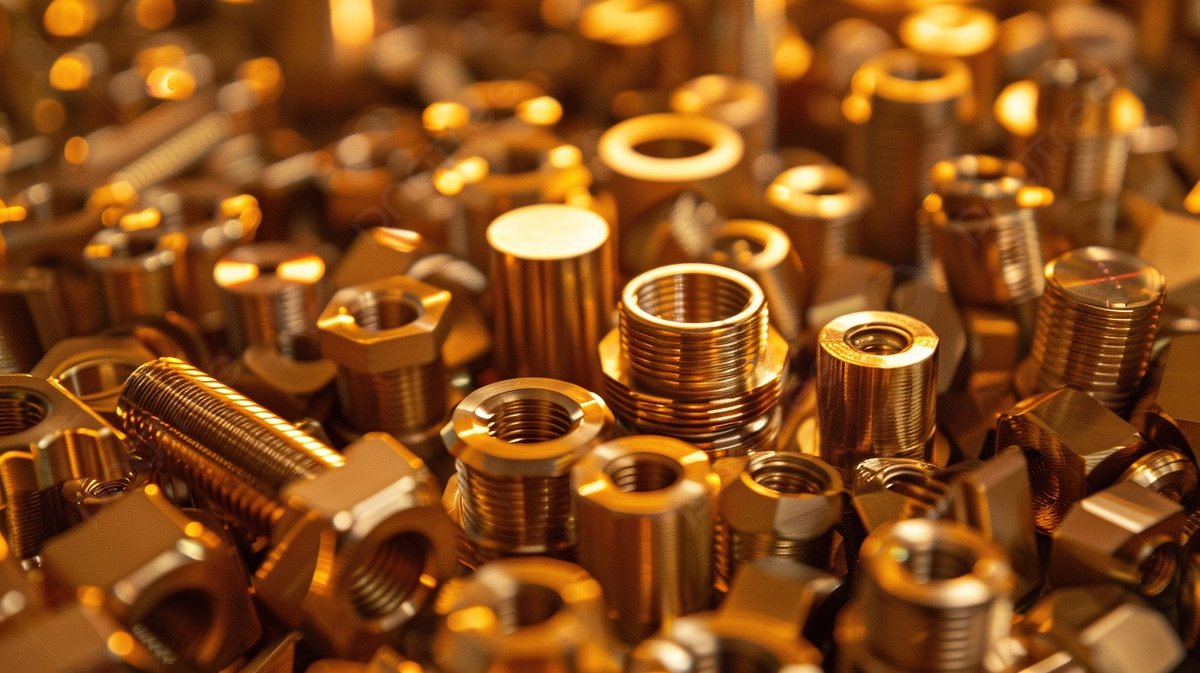
In today’s advanced manufacturing landscape, non-ferrous metal components have become essential across a wide range of industries. Among them, brass and copper hold a prominent position due to their superior electrical conductivity, corrosion resistance, machinability, and long-term reliability. As industries demand higher efficiency, precision, and sustainability, brass, copper, and other non-ferrous metal components continue to dominate modern engineering applications.
This blog explores what non-ferrous metals are, why brass and copper are so widely used, their manufacturing processes, key advantages, and the industries that rely on them.
Understanding Non-Ferrous Metals
Non-ferrous metals are metals that do not contain iron as a primary component. Unlike ferrous metals, they do not rust and generally offer better resistance to corrosion, making them ideal for demanding environments.
Common non-ferrous metals used in precision components include:
-
Brass
-
Copper
-
Aluminum
-
Bronze and specialized alloys
These materials are selected based on application-specific requirements such as conductivity, strength, weight, thermal properties, and environmental resistance.
Why Brass and Copper Are Preferred in Precision Components
Brass: The Ideal Machining Alloy
Brass is an alloy of copper and zinc, engineered to provide excellent machinability and mechanical stability. It allows manufacturers to achieve tight tolerances, smooth surface finishes, and complex geometries with minimal tool wear.
Key advantages of brass components:
-
Excellent machinability and repeatability
-
High corrosion resistance
-
Good electrical conductivity
-
Low friction and wear resistance
-
Long service life
These characteristics make brass suitable for precision components used in electrical, plumbing, automotive, and industrial applications.
Copper: The Benchmark for Conductivity
Copper is widely regarded as the best material for electrical and thermal conductivity. It is indispensable in applications where efficient current flow and heat dissipation are critical.
Key advantages of copper components:
-
Exceptional electrical conductivity
-
High thermal conductivity
-
Good ductility and formability
-
Reliable performance under electrical load
Copper components are commonly used in electrical connectors, terminals, busbars, and power distribution systems.
Manufacturing Process of Non-Ferrous Metal Components
Producing high-quality brass, copper, and non-ferrous metal components requires precision machining and strict quality control.
1. Material Selection & Inspection
Raw materials such as rods, bars, or billets are selected based on alloy composition and application requirements. Incoming material is inspected to ensure compliance with mechanical and chemical standards.
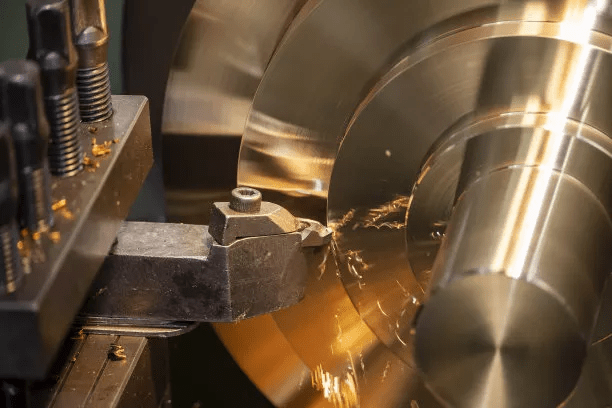
2. CNC Machining & Turning
Advanced CNC machines are used for turning, milling, drilling, threading, and shaping non-ferrous metals. CNC machining ensures:
-
High dimensional accuracy
-
Consistency across batches
-
Ability to produce complex designs
Non-ferrous metals are particularly well-suited for CNC machining due to reduced tool wear and smoother cutting.
3. Secondary Operations
Depending on the end use, components may undergo:
-
Deburring and polishing
-
Surface finishing
-
Plating or coating
These processes enhance corrosion resistance, aesthetics, and functional performance.
4. Quality Control & Inspection
Each component is inspected using precision measuring instruments to verify dimensions, tolerances, and surface finish. This ensures components meet customer specifications and international standards.
Advantages of Non-Ferrous Metal Components
Corrosion Resistance
Non-ferrous metals do not rust, making them ideal for outdoor, marine, plumbing, and humid environments.
Lightweight & High Strength
Materials like aluminum and brass offer an excellent strength-to-weight ratio, reducing overall system weight without compromising performance.
Superior Electrical & Thermal Performance
Copper and brass provide reliable conductivity, making them essential for electrical and electronic applications.
Precision & Reliability
Non-ferrous metals allow tight tolerances and consistent machining results, ensuring reliable performance in critical assemblies.
Sustainability
Most non-ferrous metals are recyclable without loss of properties, supporting environmentally responsible manufacturing.
Industrial Applications of Brass, Copper & Non-Ferrous Components
Electrical & Electronics Industry
Used in terminals, connectors, contact pins, busbars, switchgear parts, and control panels where conductivity and reliability are critical.
Automotive & EV Sector
Applied in sensors, connectors, heat exchangers, fuel system components, and electric vehicle assemblies.
Industrial Machinery & Engineering
Used in gears, bushings, spacers, couplings, and fasteners that require wear resistance and precision.
Plumbing & Fluid Control
Brass and copper components are widely used in valves, pipe fittings, adapters, and flow control systems due to their corrosion resistance and leak-proof performance.
Renewable Energy & Power Systems
Non-ferrous components are essential in solar, wind, and power distribution systems where efficiency and durability are required.
Custom Non-Ferrous Metal Components
Modern engineering often demands customized solutions rather than standard parts. Non-ferrous metal machining supports:
-
Custom dimensions and tolerances
-
Complex shapes and profiles
-
Specific surface finishes
-
Application-specific material selection
Custom components help improve system efficiency, reduce assembly issues, and enhance product performance.
Recent Post